
Africa’s economy is projected to grow by 4.2% in 2026 before reaching 4.4% in 2027, according to the African Development Bank’s (AfDB) African Economic Outlook 2026. Beyond macroeconomic performance, the institution’s analyses highlight the importance of investment, infrastructure development, industrialization, and financing mechanisms in transforming African economies. These developments offer important perspectives for businesses, investors, construction professionals, and territorial development stakeholders, while highlighting the potential for stronger economic partnerships between Morocco and other African countries.
Africa: Economic Growth Supporting the Continent’s Transformation
Published on May 26, 2026, in Brazzaville, the African Development Bank’s African Economic Outlook 2026 outlines the continent’s main economic trends through 2027.
Following estimated growth of 3.5% in 2024, Africa’s real gross domestic product (GDP) is estimated to have expanded by 4.4% in 2025.
The AfDB forecasts economic growth of 4.2% in 2026, followed by an increase to 4.4% in 2027.
According to the Bank, 36 of Africa’s 54 countries recorded faster growth in 2025 than in 2024, while 22 economies achieved growth rates exceeding 5%.
Real GDP per capita growth, estimated at 2.1% in 2025, is projected at 1.9% in 2026 before rising to 2.2% in 2027.
These indicators demonstrate the diversity of economic developments across Africa amid changing international trade conditions, financing environments, and energy markets.
For businesses and investors, the outlook also calls for a sector-specific interpretation.
GDP growth provides an overall indication of economic performance, but its impact on construction, industry, and infrastructure depends on investment policies, financing capacity, and the actual implementation of projects.
The AfDB’s forecasts therefore provide a foundation for understanding economic transformation across the continent and assessing developments relevant to construction, civil engineering, logistics, and territorial planning.
Source: AfDB — African Economic Outlook 2026.
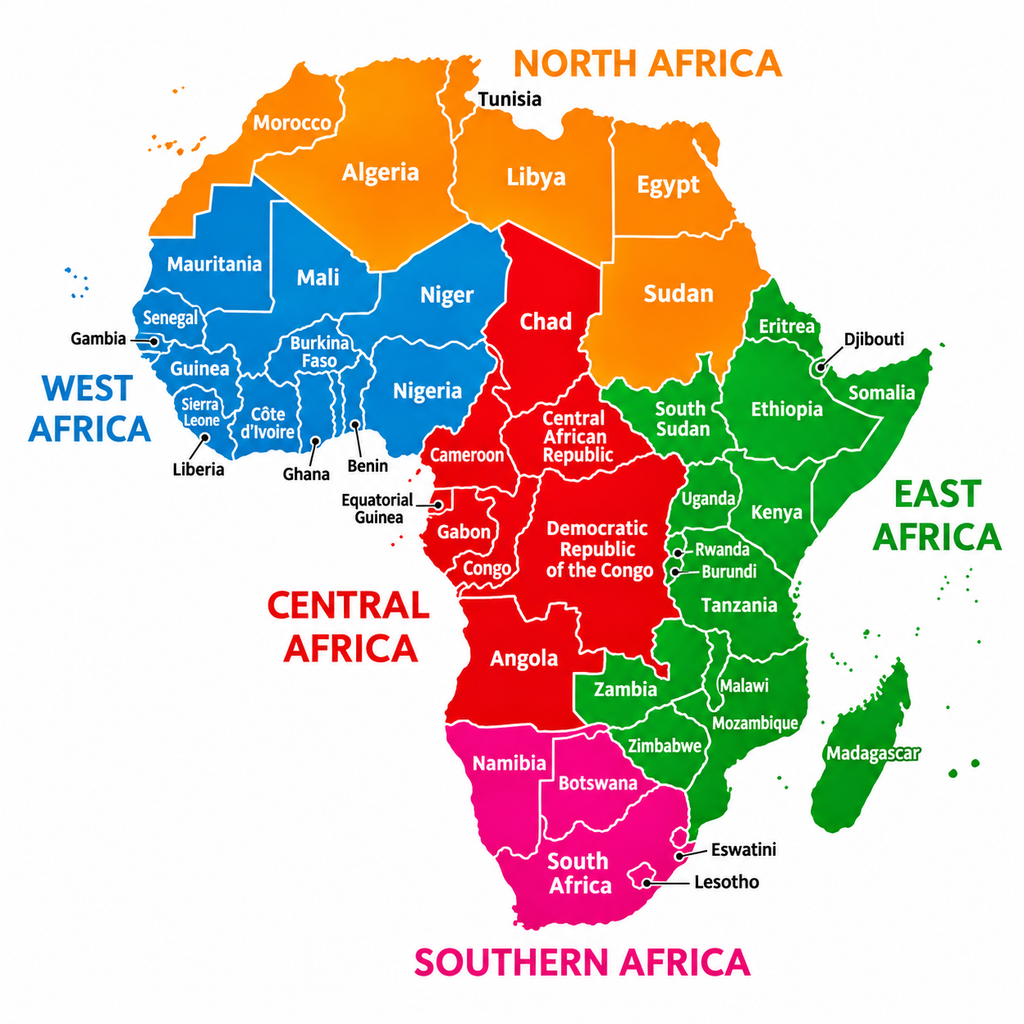
Economic Outlook 2026–2027: Africa’s Five Regions
Regional projections reveal several centers of economic growth, each following a distinct development trajectory.
Real GDP Growth by Region
| Region | 2025 (estimate) | 2026 (forecast) | 2027 (forecast) |
|---|---|---|---|
| East Africa | 6.6% | 5.9% | 6.4% |
| West Africa | 4.8% | 4.7% | 4.5% |
| North Africa | 4.4% | 4.0% | 4.2% |
| Central Africa | 3.6% | 3.8% | 4.1% |
| Southern Africa | 2.3% | 2.1% | 2.7% |
| Africa | 4.4% | 4.2% | 4.4% |
Source: African Development Bank, African Economic Outlook 2026, May 2026 edition.
East Africa: Sustained Growth and Productive Transformation
With estimated growth of 6.6% in 2025 and forecasts of 5.9% in 2026 and 6.4% in 2027, East Africa remains one of the continent’s leading growth regions.
Public and private investment, agriculture, services, industry, and infrastructure contribute to economic performance across several countries.
Economic development is also supported by improvements in connectivity, energy networks, and productive infrastructure.
For businesses and investors, these developments highlight the importance of monitoring industrial policies, transport programs, logistics infrastructure, and financing mechanisms.
Project implementation timelines nevertheless vary by country and depend on national economic priorities and available resources.
West Africa: Industrialization, Logistics, and Investment
West Africa is expected to record growth of 4.7% in 2026, compared with an estimated 4.8% in 2025, before reaching 4.5% in 2027.
Investment in infrastructure, energy, agricultural processing, industrial activities, and services continues to support the regional economy.
Several countries are strengthening their productive capacities and expanding their integration into regional and international trade.
Ports, road networks, logistics platforms, and industrial zones play an important role in improving competitiveness.
For construction and civil engineering professionals, infrastructure development represents an important area for monitoring national investment programs.
It remains essential, however, to distinguish structural investment needs from announced projects and operations that have already secured financing.
North Africa: Economic Diversification and Infrastructure Development
The AfDB estimates North Africa’s growth at 4.4% in 2025, with forecasts of 4.0% in 2026 and 4.2% in 2027.
The region’s economies have diversified profiles supported by manufacturing, services, tourism, energy activities, and infrastructure investment.
Transport networks, industrial facilities, logistics, and energy infrastructure remain important components of national development strategies.
For economic stakeholders, developments in industrial capacity, investment policies, and regional trade represent essential factors in assessing market prospects.
Central Africa: Resources, Diversification, and Connectivity
Central Africa’s economic growth is projected to increase from 3.6% in 2025 to 3.8% in 2026 and 4.1% in 2027.
Natural resources, energy activities, and public investment contribute to economic activity across the region.
Productive diversification strategies are accompanied by demand for transport infrastructure, energy distribution networks, and industrial facilities.
Improving connectivity between territories can also facilitate trade and strengthen regional economic integration.
For businesses and investors, these prospects require an assessment of national investment programs, regulatory frameworks, and project-specific financing arrangements.
Southern Africa: Modernizing Productive Capacity
In Southern Africa, economic growth is expected to reach 2.1% in 2026, compared with 2.3% in 2025, before increasing to 2.7% in 2027.
Mining, industrial activities, and energy are among the region’s main economic drivers.
Development prospects depend partly on improving energy infrastructure, modernizing logistics networks, and strengthening productive capacity.
Regional economic performance highlights the importance of infrastructure quality, maintenance, and modernization in supporting business activity.
Economic Growth: Prospects Across Selected African Countries
The AfDB’s country reports provide a more detailed understanding of continental trends and the different development trajectories of individual economies.
The following table presents a selection of 23 African countries, representing all five regions of the continent, with broader coverage of English-speaking African markets.
This selection illustrates the diversity of national economic performance. It is neither an exhaustive ranking of all 54 African countries nor a ranking of their investment attractiveness.
Real GDP Growth: Selected African Countries, 2025–2027
| Country | 2025 (estimate) | 2026 (forecast) | 2027 (forecast) |
|---|---|---|---|
| Rwanda | 9.4% | 7.0% | 7.4% |
| Senegal | 8.3% | 5.2% | 5.9% |
| Benin | 8.1% | 7.0% | 7.1% |
| Zimbabwe | 7.6% | 4.3% | 4.5% |
| Uganda | 6.7% | 6.2% | 8.0% |
| Côte d’Ivoire | 6.5% | 6.2% | 6.5% |
| The Gambia | 6.1% | 4.9% | 5.0% |
| Tanzania | 6.0% | 5.4% | 6.1% |
| Ghana | 5.8% | 5.0% | 5.4% |
| Zambia | 5.2%* | 5.0% | 6.3% |
| Kenya | 5.0% | 4.6% | 4.7% |
| Morocco | 4.9%** | 4.2% | 4.3% |
| Liberia | 4.6% | 5.0% | 5.3% |
| Sierra Leone | 4.6% | 4.2% | 4.8% |
| Eswatini | 4.6% | 4.0% | 3.5% |
| Nigeria | 4.0% | 4.1% | 3.7% |
| Mauritania | 4.0% | 4.4% | 4.7% |
| Cameroon | 3.7% | 4.0% | 4.1% |
| Algeria | 3.3% | 4.1% | 4.2% |
| Mauritius | 3.2% | 3.0% | 3.8% |
| Malawi | 2.7% | 2.3% | 3.3% |
| Namibia | 1.7% | 2.5% | 3.5% |
| South Africa | 1.1% | 1.2% | 1.6% |
| Botswana | −0.7%*** | 1.2% | 3.5% |
Methodological Notes
Zambia (*): The AfDB’s 2026 Country Focus Report estimates GDP growth at 5.2% in 2025. However, the country’s economic outlook also reports an estimate revised to 3.8% by national authorities in March 2026. The table uses the figure published in the Country Focus Report. Banque Africaine de Développement+1
Morocco ():** The 2025 estimate of 4.9% comes from the AfDB Country Report published on October 30, 2026. The 2026 and 2027 forecasts come from the June 2026 economic outlook.
Botswana ():* The 2025 estimate of −0.7% comes from the AfDB’s June 2026 country economic outlook. The continental report provides a different estimate of −0.3%. Banque Africaine de Développement
Côte d’Ivoire: The forecasts of 6.2% for 2026 and 6.5% for 2027 are provided in Chapter 1 of the African Economic Outlook 2026. Banque Africaine de Développement
Data and coverage: The table presents 24 selected African countries across all five regions. It is not an exhaustive ranking of Africa’s 54 economies. Figures are drawn from AfDB publications issued at different dates and may reflect different statistical revisions. The 2026 and 2027 figures remain forecasts subject to revision.
Official sources: AfDB — African Economic Outlook 2026 and AfDB — Country Economic Outlooks.
Different Models of Economic Growth and Development
National performance demonstrates that African growth is supported by different factors, including infrastructure, manufacturing, agriculture, energy, services, and investment.
For businesses and investors, this diversity highlights the importance of understanding the specific characteristics of individual markets.
Benin: Infrastructure, Industry, and Logistics Development
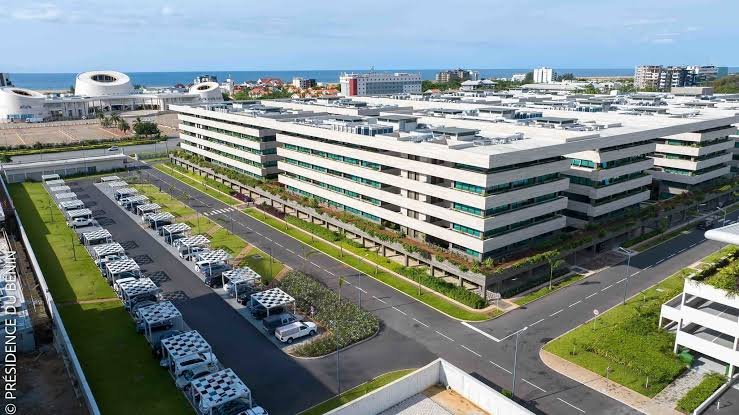
Benin recorded estimated economic growth of 8.1% in 2025, according to AfDB data.
The main drivers identified include public works, where activity reportedly increased by 9.8%, textiles (+9.3%), and agro-industry (+8.4%).
Economic growth is projected at 7.0% in 2026 and 7.1% in 2027.
The modernization of the Port of Cotonou and the development of the Glo-Djigbé Industrial Zone are contributing to the transformation of the country’s productive environment.
These developments illustrate the complementary roles of logistics infrastructure, industrial development, and international trade.
For construction companies, engineering firms, and industrial equipment suppliers, this momentum highlights the importance of monitoring infrastructure modernization programs and the requirements associated with expanding productive activities.
Source: AfDB — Benin Economic Outlook.
Rwanda: Infrastructure Development and Connectivity

Rwanda’s economic growth is estimated at 9.4% in 2025, supported by services, construction, manufacturing, and agriculture.
The AfDB forecasts growth of 7.0% in 2026, followed by 7.4% in 2027.
The country continues to develop its infrastructure and productive capacities.
Among the major projects identified is Bugesera International Airport, which forms part of efforts to strengthen connectivity and transport infrastructure.
This strategy is accompanied by substantial financing requirements.
According to the AfDB, public debt represented approximately 75% of GDP in 2025, while the current account deficit reached 13.1% of GDP, partly reflecting investment-related imports.
Rwanda therefore illustrates the relationship between economic growth, infrastructure development, and the mobilization of sustainable financing resources.
Source: AfDB — Rwanda Economic Outlook.
Côte d’Ivoire: Private Investment and Economic Transformation
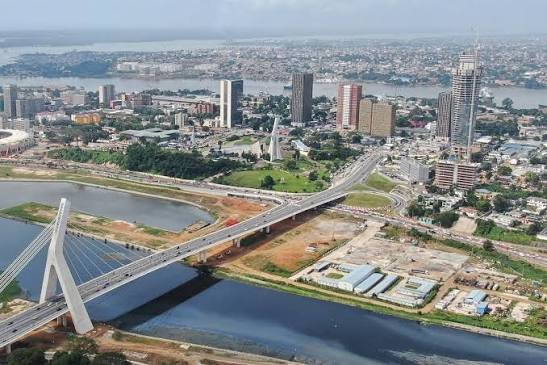
Côte d’Ivoire’s economic growth is estimated at 6.5% in 2025, compared with 6.0% in 2024.
The AfDB forecasts growth of 6.2% in 2026 and 6.5% in 2027 in its May 2026 continental report.
Industry, construction, energy, extractive activities, and services contribute to the country’s economic momentum.
The National Development Plan 2026–2030 is a central component of its economic development strategy.
According to the AfDB, planned investment under the program amounts to approximately USD 208.7 billion, with the private sector expected to account for 70.2%.
These figures refer to investments planned under the development strategy and do not represent fully secured financing or contracts already awarded.
For economic stakeholders, the significance of this program lies in monitoring priority sectors, financing mechanisms, and the gradual implementation of projects.
Infrastructure, energy, industrial facilities, and construction are among the sectors supporting Côte d’Ivoire’s economic transformation.
Sources: AfDB — Côte d’Ivoire Economic Outlook and African Economic Outlook 2026.
Senegal: Economic Growth and Development Financing
Senegal recorded estimated growth of 8.3% in 2025, primarily supported by the development of oil and gas activities.
The AfDB forecasts growth of 5.2% in 2026, followed by 5.9% in 2027.
The country’s economic expansion is accompanied by financing requirements for infrastructure, productive facilities, and broader development.
Resource mobilization, improvements in public financial management, and economic partnerships remain important factors in supporting investment.
From a sectoral perspective, transport networks, energy infrastructure, logistics facilities, and industrial development are important areas to monitor.
Project implementation will depend on financing arrangements, timelines, and national economic priorities.
Source: AfDB — Senegal Economic Outlook.
Uganda, Zambia, and Zimbabwe: Infrastructure and Productive Investment

Several English-speaking African economies also present significant developments relevant to construction and infrastructure professionals.
Uganda recorded estimated economic growth of 6.7% in 2025, with forecasts of 6.2% in 2026 and 8.0% in 2027.
The AfDB identifies investment in the extractive sector, agricultural productivity, agro-processing, and oil-related infrastructure among the factors supporting the country’s economic prospects.
Zambia is projected to grow by 5.0% in 2026 and 6.3% in 2027, supported by mining, agriculture, and the energy sector.
The country’s development priorities highlight the importance of energy infrastructure, productive investment, and regional economic integration.
Zimbabwe recorded estimated growth of 7.6% in 2025, supported by agriculture, mining, manufacturing, and investment.
The AfDB forecasts growth of 4.3% in 2026 and 4.5% in 2027.
Across these economies, the development of energy networks, industrial facilities, transport infrastructure, and technical services represents an important area of analysis for businesses and investors.
However, economic projections alone do not establish that specific infrastructure contracts are available.
Sources: AfDB — Uganda, Zambia, and Zimbabwe Economic Outlooks.
West Africa’s English-Speaking Markets: Ghana, Liberia, Sierra Leone, and The Gambia

The AfDB’s assessments also provide insights into several English-speaking West African economies.
Ghana recorded estimated growth of 5.8% in 2025, with forecasts of 5.0% in 2026 and 5.4% in 2027.
Services, consumption, productive investment, and economic diversification remain important elements of its development outlook.
Liberia is projected to grow by 5.0% in 2026 and 5.3% in 2027, supported by mining and agriculture.
Public infrastructure spending is among the factors identified by the AfDB as having supported economic activity in 2025.
Sierra Leone is expected to record growth of 4.2% in 2026 and 4.8% in 2027, supported by services, agriculture, and mining.
The Gambia recorded estimated growth of 6.1% in 2025, with forecasts of 4.9% in 2026 and 5.0% in 2027. Tourism, trade, and transport are among its important economic activities.
For construction and engineering professionals, these developments reinforce the value of monitoring infrastructure investment, logistics facilities, industrial programs, and project-financing frameworks across different markets.
Sources: AfDB — Ghana, Liberia, Sierra Leone, and The Gambia Economic Outlooks.
Ethiopia: Industrial Development and Strategic Investment
On November 3, 2026, the AfDB published a country report on Ethiopia.
According to the publication, Ethiopia’s economy recorded 9.8% growth during the 2024/2025 fiscal year, supported by industrial recovery, exports, and economic reforms.
This figure follows the country’s own fiscal calendar and should not be directly compared with calendar-year statistics reported for other economies.
The development priorities identified by the AfDB include infrastructure, connectivity, energy, and agro-industrial transformation.
These priorities highlight the role of productive facilities and economic infrastructure in national development strategies.
Monitoring industrial policies, financing mobilization, and infrastructure projects is therefore important for understanding Ethiopia’s economic development.
Source: AfDB — Ethiopia Country Focus Report 2026.
Morocco: Economic Growth, Infrastructure, and African Financial Integration

Morocco plays an important role in North Africa’s economic development, particularly through its industrial activities, infrastructure, logistics capabilities, and financial sector.
In its 2026 Country Report, published on October 30, 2026, the AfDB estimates that Morocco’s economic growth reached 4.9% in 2025, compared with 4.4% in 2024.
This progress is attributed in particular to investment, non-agricultural activities, and the recovery of agricultural production.
Morocco’s Key Economic Indicators
| Indicator | 2024 | 2025 |
|---|---|---|
| Real GDP growth | 4.4% | 4.9% |
| Fiscal deficit (% of GDP) | 3.8% | 3.5% |
| Inflation | 0.9% | 0.8% |
| Current account deficit (% of GDP) | 1.2% | 2.4% |
These indicators highlight stronger economic growth, a reduction in the fiscal deficit, and moderate inflation.
The economic outlook published in June 2026 projected growth of 4.2% in 2026 and 4.3% in 2027, supported in part by household consumption and infrastructure investment.
Infrastructure and Morocco’s Economic Transformation
The AfDB identifies several areas where financing mobilization could be strengthened, including hydro-agricultural infrastructure, water resource management, industrial and logistics infrastructure, and business financing.
Public-private partnerships, innovative financial instruments, and green finance are also among the mechanisms that could support development.
For construction and investment stakeholders, these priorities highlight the importance of long-term financing, project preparation, and capital mobilization.
Morocco’s Role in African Economic Partnerships
The AfDB also highlights Morocco’s prospects for strengthening regional financial integration, particularly through its pan-African banking groups and Casablanca Finance City.
These capabilities may support the development of economic partnerships with other African countries, particularly in investment financing and productive activities.
This dimension reflects a broader Morocco–Africa perspective: financial, industrial, logistics, and technical capabilities can support cooperation tailored to the needs of different markets.
However, such partnerships must be assessed in relation to identified projects, financing conditions, and agreements established between stakeholders.
Sources: AfDB — Morocco Country Report, October 30, 2026 and Morocco Economic Outlook.
Financing Africa’s Development: Significant Resource Mobilization Potential
Beyond growth rates, resource mobilization remains one of the continent’s central economic transformation priorities.
According to the African Economic Outlook 2026, the AfDB estimates Africa’s annual development financing gap at approximately USD 1.3 trillion to achieve the Sustainable Development Goals.
This figure covers overall development financing needs and should not be interpreted as exclusively related to infrastructure or construction.
The Bank also estimates that improved resource mobilization and utilization could generate up to USD 1.43 trillion in additional resources annually.
This represents potential resources conditional on the implementation of economic and financial reforms, rather than funding currently available for specific projects.
Key Financing Levers Identified by the AfDB
| Financing mechanism | Estimated annual potential |
|---|---|
| Improved tax and non-tax revenue mobilization | USD 469 billion |
| Improved public investment efficiency | USD 299 billion |
The Bank also indicates that African financial institutions and institutional investors collectively manage assets estimated at up to USD 4 trillion.
However, less than 2.7% of assets held on institutional balance sheets are currently deployed toward domestic long-term investment, according to the report.
These findings highlight the importance of developing mechanisms capable of directing more resources toward productive investment.
For economic stakeholders, several priorities emerge: improving project preparation, developing capital markets, establishing risk-sharing arrangements, and strengthening public-private partnerships.
Access to long-term financing remains an important factor in implementing construction, energy, industrial, and infrastructure programs.
Source: AfDB — African Economic Outlook 2026.
Construction and Infrastructure: Five Areas to Monitor in Africa’s Economic Transformation

Economic growth data provide an overview of how African economies are evolving. For construction, engineering, and investment professionals, their value also lies in identifying the sectors supporting this development.
1. Transport and Logistics Infrastructure
Ports, road networks, regional corridors, and transport facilities play a central role in the movement of goods and economic integration.
Strengthening these infrastructures can improve business competitiveness, support industrialization, and facilitate trade.
For industry professionals, monitoring transport programs requires examining planning frameworks, technical preparation, financing sources, and implementation schedules.
2. Energy and Industrial Infrastructure
Expanding energy capacity is essential for productivity and competitiveness.
Electricity generation, transmission, and distribution infrastructure supports industrial activities and services.
Reliable energy supply is also a decisive factor in business location decisions and the operation of industrial zones.
3. Water and Territorial Development
Water resource management, hydraulic infrastructure, and sanitation facilities are increasingly important in development strategies.
These investments address urban and rural needs, as well as agricultural and industrial requirements.
Climate adaptation further reinforces the importance of resilient infrastructure and territorial planning.
4. Industrial Zones and Productive Platforms
Africa’s economic transformation also depends on expanding industrial capacity.
Industrial zones, logistics platforms, and processing facilities can help strengthen value chains and support business activity.
The national experiences presented in AfDB reports illustrate the importance of linking infrastructure development, private investment, and industrial policies.
5. Project Financing and Preparation
Economic growth does not automatically guarantee the implementation of new construction or infrastructure projects.
Their realization depends on feasibility studies, technical readiness, available financing, regulatory procedures, and economic partnerships.
For businesses, investors, engineering firms, and building materials manufacturers, market analysis must distinguish between identified needs, planned projects, committed financing, and operations that have actually been launched.
This distinction is essential for assessing sector prospects beyond macroeconomic indicators alone.
Morocco–Africa: Developing Partnerships in Infrastructure and Investment

The economic outlook presented by the AfDB highlights the importance of cooperation and regional integration in supporting the continent’s productive transformation.
Infrastructure, engineering, industrial equipment, and financing requirements can provide areas of economic complementarity between African countries.
In this context, Morocco’s capabilities in construction, finance, industry, and logistics can contribute to partnerships with economic stakeholders across the continent.
Several areas are particularly relevant:
- Project financing structures and public-private partnerships.
- Transport infrastructure, ports, and logistics platforms.
- Technical studies, engineering, and construction.
- Building materials and industrial equipment.
- Energy and water infrastructure.
- Industrial zones and territorial development projects.
These prospects do not imply that contracts have already been signed or that investment programs are automatically accessible.
Rather, they illustrate areas where cooperation may be explored based on national priorities, local partnerships, financing mechanisms, and business competitiveness.
The development of Morocco–Africa economic relations can therefore benefit from improved market knowledge and the identification of technical, industrial, and financial complementarities.
Outlook to 2027: Turning Growth into Sustainable Economic Development
The AfDB’s projections confirm the diversity of African economic trajectories and the importance of investment in supporting development.
Africa’s average inflation rate, estimated at 13.7% in 2025, is projected to decline to 10.4% in 2026 and 8.9% in 2027, according to the May 2026 continental outlook.
However, these projections remain dependent on international economic conditions, financing environments, energy markets, and climate-related risks.
Beyond GDP performance, the transformation of African economies depends on their ability to develop infrastructure, strengthen production, mobilize capital, and improve connectivity between territories.
For economic stakeholders, these developments call for an approach combining macroeconomic data, investment strategies, and an understanding of sector-specific programs.
By 2027, Africa’s growth outlook will remain an important indicator of its economic momentum, while financing mobilization, skills development, and project implementation will continue to be decisive factors in the continent’s transformation.
Within this evolving landscape, economic partnerships between Morocco and other African countries can help strengthen productive capacity, professional networks, and trade across the continent.
Official Sources and Methodology
Main source: African Development Bank, African Economic Outlook 2026, published May 26, 2026.
- AfDB — African Economic Outlook 2026
- Full African Economic Outlook 2026 — English PDF
- AfDB — Country Focus Reports 2026
- AfDB — Zimbabwe Economic Outlook
- AfDB — Zambia Economic Outlook
- AfDB — Botswana Economic Outlook
- AfDB — Namibia Economic Outlook
- AfDB — Malawi Economic Outlook
- AfDB — Eswatini Economic Outlook
- AfDB — Mauritius Economic Outlook
- AfDB — Liberia Economic Outlook
- AfDB — Sierra Leone Economic Outlook
- AfDB — The Gambia Economic Outlook
Bâtimag Methodological Note: The 2025 figures reflect estimates and reported revisions published by the African Development Bank, while growth rates for 2026 and 2027 are forecasts subject to revision. Country-level figures come from publications issued on different dates. The country table is an illustrative selection rather than an exhaustive ranking of African economies. Sections on infrastructure, investment, and economic partnerships provide a sectoral interpretation of the trends presented and should not be construed as announcements of committed financing or open public tenders.
Bâtimag – The First Morocco–Africa Platform Dedicated to Construction, Civil Engineering, Architecture, and Territorial Development. Inform. Connect. Develop.